Casey Krause · 10 October 2026
Shaping Conversational Flow Through Strategic Furniture Placement in Private Virtual Lounges
Private virtual lounges rely on digital furniture layouts to guide participant interactions and researchers have documented how specific arrangements influence the pace and direction of conversations in these spaces. Studies in environmental psychology adapted to virtual reality environments show that positioning influences proximity cues which in turn shape who speaks when and how often groups form or dissolve during sessions. Platforms hosting these lounges incorporate modular seating options that users adjust in real time and data from design implementations reveal patterns where clustered arrangements increase turn-taking frequency while linear setups favor extended individual exchanges.
Proxemics Principles Applied to Digital Spaces
Proxemics research translated into virtual contexts demonstrates that distance parameters between avatars affect perceived intimacy levels and experts note that virtual furniture serves as an anchor for these distances because users gravitate toward seats that maintain comfortable buffers. In October 2026 several platforms introduced refined collision detection for furniture pieces which allowed more precise control over avatar spacing and this update coincided with reports from academic groups tracking engagement metrics across multiple regions. Observers note that when sofas face inward at angles under 120 degrees conversations tend to involve more participants simultaneously whereas outward orientations create side-by-side dynamics suited for parallel discussions that merge later.
Common Configurations and Documented Effects
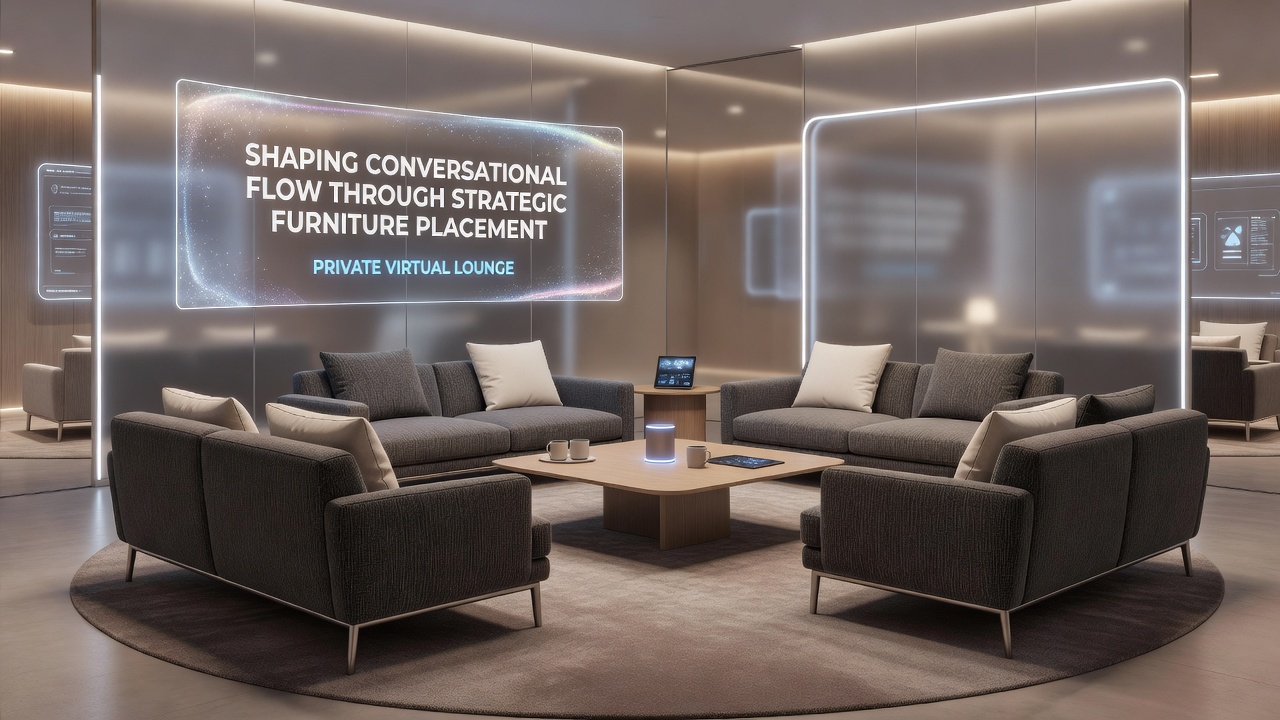
Circular table setups with surrounding chairs promote balanced participation according to findings from simulation trials conducted by university labs in North America and these arrangements reduce dominance by single speakers through equal visual access. Meanwhile L-shaped sectional sofas create natural focal points at the bend where facilitators often position themselves and records from industry conferences indicate that such placements correlate with higher rates of topic transitions during moderated events. Rectangular bar counters placed against walls encourage brief exchanges as users stand rather than settle and comparative analyses show shorter average conversation durations in these zones compared to lounge chair clusters. Platforms track these outcomes through anonymized session logs which researchers then aggregate to identify trends across different user demographics.
Technological Tools Enabling Precise Placement
Virtual design interfaces now include grid snapping and rotation sliders that help users align pieces without overlap and this precision matters because misaligned furniture disrupts flow by creating awkward gaps that avatars avoid. Software updates in late 2026 added preview modes where hosts test conversation paths before events begin and these features draw from earlier work on spatial audio rendering that ties sound directionality to furniture proximity. Industry reports from organizations such as the Association for Computing Machinery highlight how integrated physics engines prevent furniture from intersecting which maintains realistic boundaries and supports intuitive user navigation. Those who manage private lounges often combine movable ottomans with fixed benches to allow quick reconfiguration during sessions and metrics collected after such adjustments show measurable shifts in participation distribution.
Additional elements like raised platforms or tiered seating introduce vertical hierarchy that can steer attention toward designated speakers while low profile floor cushions flatten status signals and encourage egalitarian exchanges. Data compiled by research teams at institutions including those affiliated with Australian digital environment studies indicate that hybrid layouts mixing both types yield versatile outcomes across varied event formats. Users experiment with these combinations because the underlying systems log interaction heatmaps that reveal which zones sustain longer dwell times and repeated visits.
Adaptations Across Different Lounge Types
Corporate private lounges favor conference table ovals with integrated screen mounts that keep discussions task oriented and records show these setups reduce off-topic tangents compared to residential style living room simulations. Social lounges on the other hand incorporate scattered armchairs paired with side tables that invite spontaneous subgroup formation and longitudinal observations track how these patterns evolve when user numbers fluctuate. Seasonal events scheduled around October 2026 introduced temporary furniture themes such as harvest themed bench clusters which altered flow by creating larger perimeters that accommodated more simultaneous threads without crowding. Maintenance teams monitor wear patterns on virtual upholstery textures because frequent repositioning leaves digital traces that inform future default templates supplied by platform developers.
Conclusion
Furniture placement in private virtual lounges functions as an active moderator of conversational dynamics through its control over proximity sightlines and movement pathways and accumulated evidence from multiple studies confirms consistent relationships between layout choices and interaction outcomes. As platforms refine their toolsets in response to usage data designers gain finer control that supports targeted flow shaping without manual intervention at every turn. Continued documentation of these effects across global user bases provides a growing reference for effective configurations that adapt to both planned gatherings and emergent discussions.